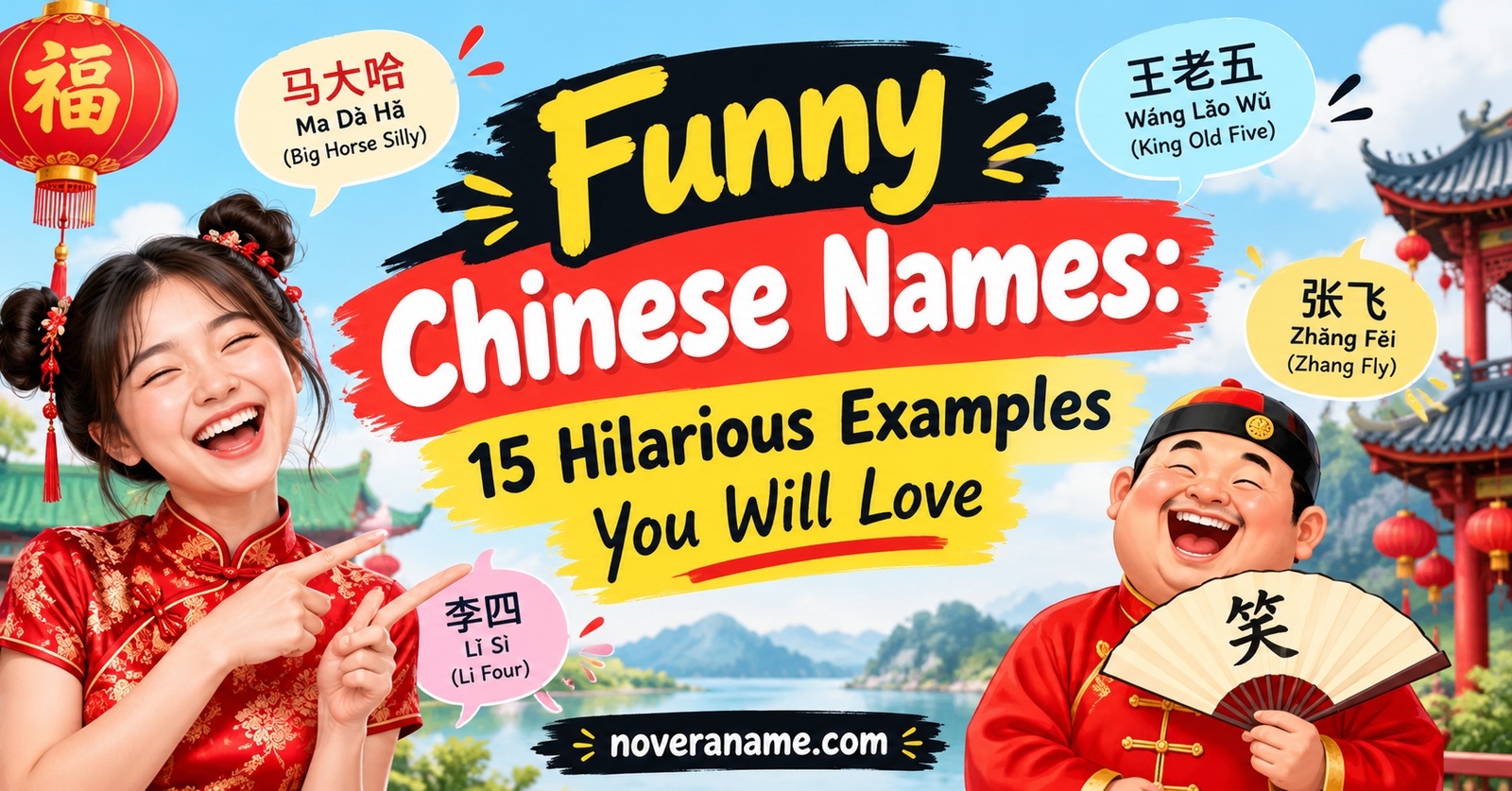
Funny Chinese names are a favorite topic online. People share funny Chinese names in group chats, in screenshots of shop signs, and in photos of menus. Some of them really are strange when read in English. Others only sound odd because two languages are colliding.
This guide explores funny Chinese names from every angle. You will find them in business titles, brands, restaurants, places, and social media. You will also learn why they exist and how to enjoy them with respect.
Here is the key idea behind funny Chinese names. A name that sounds comical in English is usually normal, meaningful, and even poetic in Chinese. The humor lives in the gap between the two languages, and that gap is what makes funny Chinese names so popular.
Chinese Names That Sound Funny in English
Most funny Chinese names are funny by accident, and the best of them were never planned. Mandarin has a limited set of syllables, and many of them match common English words. Read aloud with English pronunciation, a normal name can sound like a joke. That is how many of them are born, and why they feel so universal.
Take the surname Wang. It means “king” and is one of the most common family names in the world. English speakers may giggle at the sound, but it is a proud name, not one of the truly funny ones. The surnames Hu, Sun, Ma, and Dong also create wordplay, and they appear on many lists of funny Chinese names.
Pronunciation is the real culprit. A reader who knows no Mandarin simply applies English sound rules, and the result is often a surprise.
Here are the main types of Chinese names that sound funny in English:
- Surnames that match English words, such as Sun, Hu, Wu, and Dong.
- Given names that sound like English phrases when spoken quickly.
- Repeated syllable names, such as Dong Dong or Mei Mei.
- Spellings that look unusual to English readers, such as Xi or Zhuang.
Repeated syllable names deserve special attention. Chinese families use them to show affection for children. English speakers hear them as cute or silly, so they often appear in collections of funny names. To Chinese ears, they feel warm.
So when you spot funny Chinese names online, remember that they are ordinary names caught in a funny translation moment.
You May Also Like This : 110+ Funny Names for Short People (Cute, Cool & Hilarious)
Funny Chinese Business and Company Names
Business titles are a goldmine for funny Chinese names. Chinese companies often choose names for sound, luck, and meaning. When those names are written in pinyin or translated word for word, the English result can be surprising. Many business names begin this way.
One famous example is the beverage company Wahaha. The name sounds like laughter in English, so it is one of the most smile worthy names around. In Chinese, it was chosen because it is cheerful and easy for children to say.
Another well known case is Lao Gan Ma, a popular chili sauce. The name literally means something like “old dry mother.” That literal version sounds hilarious, so it often tops lists of funny Chinese names. In Chinese, it refers to a respected older woman, so these names are really terms of respect.
Goubuli is another favorite among funny Chinese names. This steamed bun brand from Tianjin is often translated as “dog does not care.” The story says a nickname became the shop name, and it is now a beloved heritage brand, one of the most charming funny Chinese names in food.
Here are patterns you will notice in funny Chinese business and company names:
- Lucky words, such as fortune, prosperity, and gold.
- Family titles, such as grandma and uncle, which suggest trust.
- Animals, such as rabbits and tigers, in food brands.
- Direct descriptions, such as “Big Happy” or “Very Good Noodles.”
The lesson about funny Chinese names is simple. Chinese business names favor warmth, luck, and clarity over cleverness. When English readers meet them through a literal translation, they become funny Chinese names almost instantly.
Traditional Chinese Names with Funny English Meanings
Traditional Chinese names carry deep meanings. Parents choose characters that stand for virtue, nature, strength, or hope. When those meanings are translated, the results can become funny Chinese names in English.
Imagine a given name meaning “Pine Tree Longevity” or “Jade Dragon.” In Chinese, these are beautiful. A name like “Build the Nation” may seem odd in English, yet it was popular in certain decades because it reflected the mood of the era. Such names are classic cases of lost meaning.
Many traditional names come from a few themes:
- Virtue names, such as Wise, Honest, or Diligent.
- Nature names, such as Cloud, River, Mountain, or Bamboo.
- Season names, such as Spring or Winter Plum.
- Era names, which reflect national events or ideals.
When you read traditional funny Chinese names, look past the literal translation. Behind each of these funny Chinese names is a hope, a poem, or a piece of history.
Funny Chinese Celebrity and Public Figure Names

Celebrity names are another area where funny Chinese names appear. These are real people, and their names are normal in Chinese. Any humor comes from how the names sound to English speakers, and it should always be friendly. Such names should never be used to mock.
Consider some famous names. Jackie Chan is the English stage name of a global action star. The actress Gong Li has a name whose first syllable sounds like a musical gong. The basketball star Yao Ming has a name that fans around the world learned quickly. Some fans include these on informal lists because of the sound alone.
Other names that English speakers find amusing include:
- Jet Li, a stage name that matches his fast action style.
- Fan Bingbing, whose repeated syllable gives a rhythmic bounce.
- Ma Long, a champion table tennis player whose name can mean “horse dragon.”
- Sun Yang, a swimmer whose surname sounds like our star.
The takeaway is that funny Chinese names among celebrities are simply names that are new to your ears. Learn the correct pronunciation of funny Chinese names, and the humor often turns into appreciation.
Funny Chinese Product and Brand Names
Brand naming is hard in any language. A company entering China must create a Chinese name that sounds good, carries positive meaning, and fits local culture. This process has produced some of the best stories about funny Chinese names.
Coca Cola is the classic success story. Its Chinese name, Kekou Kele, means roughly “tasty and joyful.” Early shopkeepers had chosen characters for sound alone, which created strange results. The official name fixed that problem and became a model among funny Chinese names that turned out well.
Viagra is another interesting case. Its Chinese name combines characters that suggest “mighty” and “steel.” Many marketing experts cite it as a clever example of funny Chinese names that are both phonetic and meaningful.
You may also have heard that KFC once had a slogan mistranslated as “eat your fingers off.” This story is repeated often online, but accounts of it are hard to verify. Treat it as a popular legend.
Today, most major companies test their Chinese names carefully, because a bad name can hurt a launch. The best ones keep the sound of the original and add a lucky meaning. When they get it wrong, funny Chinese names for brands become internet history.
Funny Chinese Names That Are Puns in English
Puns are the heart of funny Chinese names. A pun happens when a Chinese name sounds like an English phrase, and the effect can be delightful even if the Chinese speaker never intended it. Many of these puns work purely by sound.
Here are types of accidental puns English speakers often notice:
- Names that sound like a question, such as “Wei,” which sounds like “way,” or “Hu,” which sounds like “who.”
- Names that sound like objects when spoken quickly.
- Names that sound like a sentence when paired with an English first name.
- Names that rhyme with common English words, such as Dong, Wong, or Ping.
Not every pun in funny Chinese names is polite to repeat. Many circulate in jokes that should never be aimed at real individuals. The better way to enjoy funny Chinese names that are puns is as a language curiosity, not as a target for teasing.
Funny Chinese Restaurant Names You Have to See
Restaurants are where funny Chinese names become truly fun. Menus and signs often use direct translations of dish names, and the results range from poetic to puzzling. A single menu can contain a dozen funny Chinese names, and each one hides a story.
Some well known dish names show the style clearly:
- Mapo tofu, often explained as “pockmarked grandmother’s tofu.”
- Ants climbing a tree, a savory glass noodle dish with minced pork.
- Husband and wife lung slices, a cold Sichuan appetizer.
- Lion’s head meatballs, a large pork meatball from eastern China.
- Buddha jumps over the wall, a rich soup said to tempt even monks.
These names are not meant to be silly. Each comes from a story, a shape, or a legend. Ants climbing a tree describes minced meat clinging to noodles like ants on a branch. Lion’s head refers to the round shape and the cabbage that looks like a mane.
Restaurant titles themselves can be just as entertaining. Many Chinese restaurants abroad choose names built around luck, such as Golden Dragon, Lucky Garden, or Happy Family. Others use bold descriptions like “Number One Noodle House.” These are friendly funny Chinese names for hungry readers.
You may also find shops named after a person plus a food, such as “Uncle Li Dumplings” or “Auntie Wang Pancakes.” They feel trustworthy because a person stands behind the food.
If you love food and language, funny Chinese names are a treat, and hunting for them on menus is a fantastic hobby. Just taste the dish before judging the name. Many of the strangest titles belong to the most delicious meals, and locals are often delighted when visitors ask about the story.
Funny Chinese Place Names and Street Names
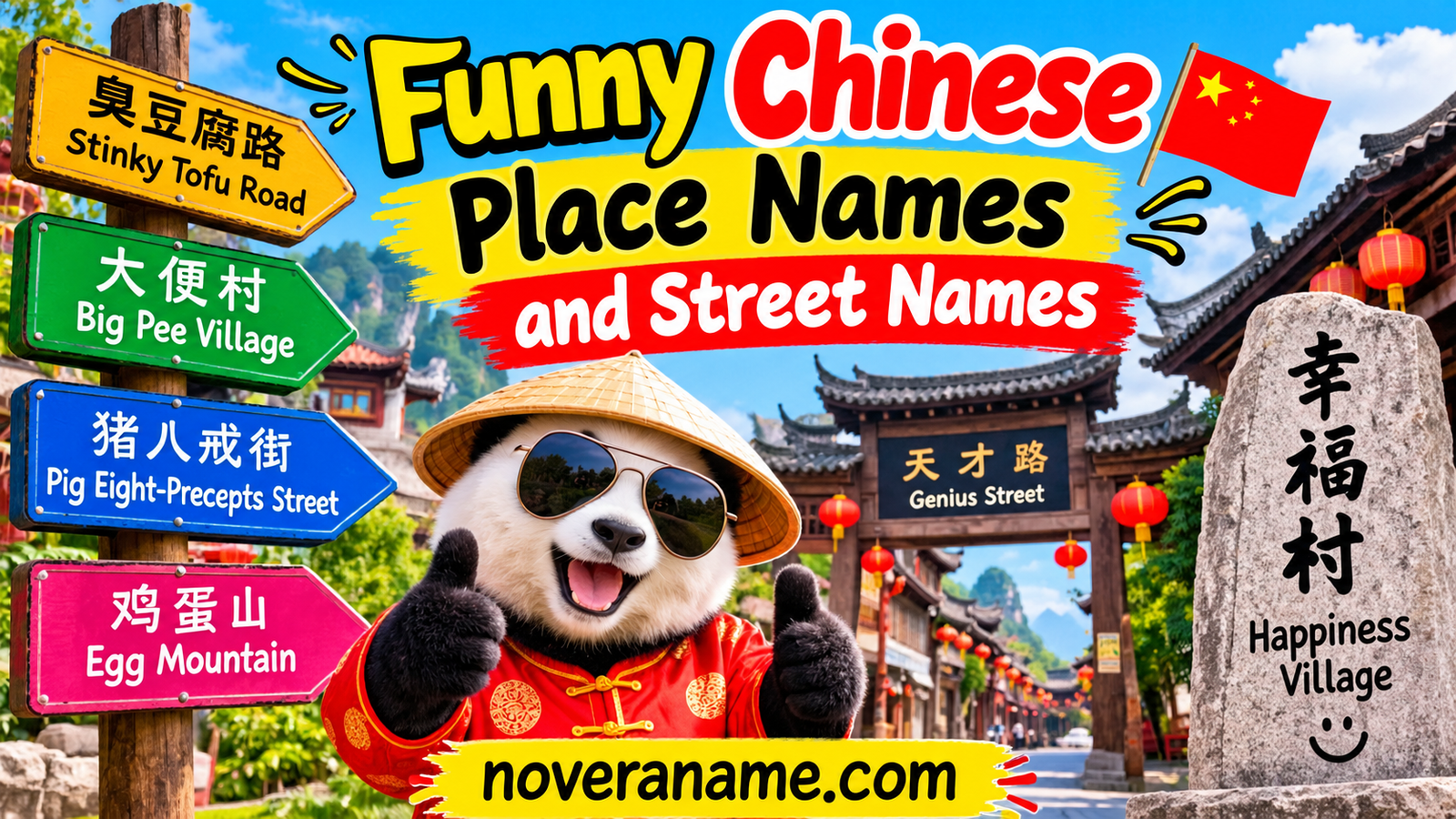
Place names across Chinese speaking regions can sound surprising to English readers. Cities, towns, districts, and streets carry meanings tied to geography, history, or good fortune. Many funny Chinese names appear on maps for this reason.
Hong Kong is a rich source because its place names were Romanized from Cantonese. Names such as Wan Chai, Hung Hom, Wong Tai Sin, and Sheung Wan look unusual to many visitors. Some seem like English phrases, while others simply feel exotic. These names all have clear origins in local history.
Mainland China also has memorable place names. Wuxi, Wuhan, and Xian are major cities whose spellings are new to many English speakers. Smaller villages often have names based on landmarks, such as “Stone Bridge Village” or “Peach Blossom Valley.” Such funny Chinese names are really just poetic descriptions.
These practical names contrast with poetic village names. Together they show how funny Chinese names on maps work, and why they rarely mean what English speakers expect. Meaning comes first, and sound is secondary.
When English speakers read these names in pinyin, funny coincidences appear. A street might sound like an English word, or a town might look like a misspelled phrase. The truth is that these are as meaningful to locals as Springfield or Riverside are to English speakers.
Next time you travel, learn the meaning of the places you pass. The funniest of all funny Chinese names often have the loveliest stories.
Funny Chinese Names Found on Social Media
Social media has created a whole new category of funny Chinese names. Usernames, English nicknames, and creative handles are everywhere, and many are charming. Scroll briefly and funny Chinese names fill every comment section.
One common trend is the English name. Many Chinese students and professionals choose an English name for school or work. Some pick classic names like David or Emily. Others pick Apple, Sunny, Lucky, Cookie, or Monkey, which read as funny to Western readers. These names, adopted in English, are chosen with real affection.
Chinese netizens also love slang and playful nicknames. A famous example is “Lao Wang next door,” a joke character used in humor posts. Another is the habit of giving pets cute, repeated syllable names. Such nicknames spread quickly.
Here are patterns you will see:
- English words used as given names, such as Sunshine, Happy, or Tiger.
- Mixed language handles with pinyin and English, like many online names.
- Number combinations that sound like words in Chinese.
- Cute nicknames based on animals, foods, and weather.
If you meet a friend online with a funny English name, treat it with kindness. Ask how they chose it, since funny Chinese names often carry a story. The story behind funny Chinese names is often more interesting than the name itself.
Funny Chinese Names That Get Lost in Translation
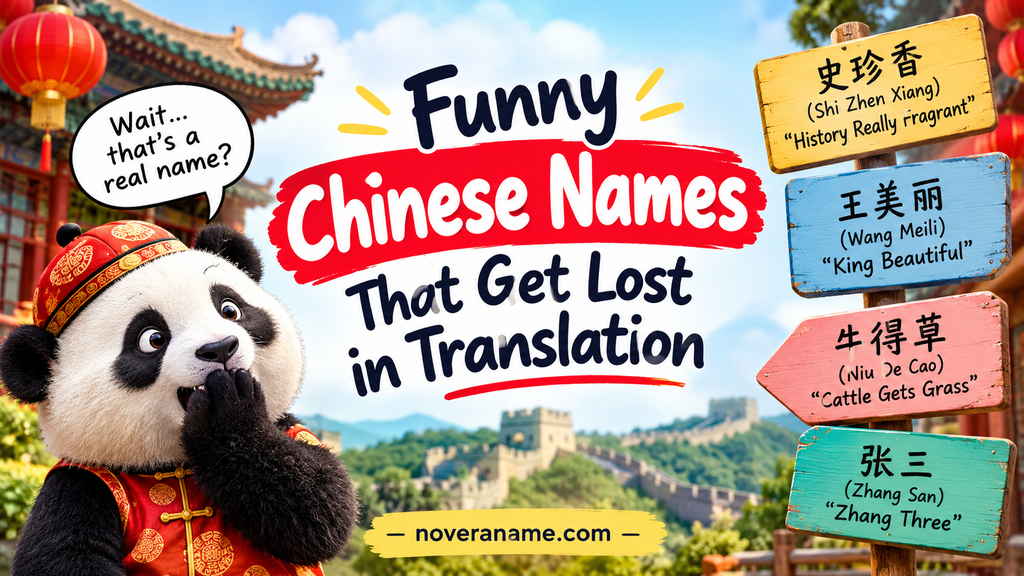
Anyone who has used a translation app on a menu has seen this first hand.
Translation is where funny Chinese names get most of their power. A name can be lovely in one language and ridiculous in another, simply because the translation loses tone, rhythm, or cultural context. Many funny Chinese names are really translation accidents.
There are three main ways names get lost in translation:
- Literal translation. A name meaning “Brilliant Jade Lake” is poetic in Chinese but stiff in English.
- Phonetic translation. A name is written in English letters, but the sounds do not match English habits.
- Cultural gaps. A name that signals respect in China may mean little elsewhere.
The best fix for funny Chinese names is to translate meaning and feeling, not just words. Professional translators often keep the original name and add a short explanation. Brands now often have two names, one for each market, linked by a shared meaning. That approach avoids the worst funny Chinese names and builds trust with customers.
For travelers, check how funny Chinese names are pronounced before reacting.
Funny Chinese names that get lost in translation remind us that language is not just a code. It is a culture, and every name carries a little of it.
How Chinese Naming Traditions Work
To understand funny Chinese names, you need to know how Chinese naming works. The system differs from English in several ways, and those differences explain a lot about funny Chinese names.
In Chinese, the family name comes first and the given name second. So a person called Wang Li has the surname Wang and the given name Li. English speakers often reverse this order without realizing it, which creates some funny names by accident.
Chinese surnames also have a long history. Many come from ancient states, official titles, or places, and some families can trace theirs back thousands of years.
Most family names are a single character. The most common are Wang, Li, and Zhang, shared by hundreds of millions of people, so the funny part usually comes from the given name. Because common surnames are shared so widely, given names carry much of the personal identity.
Given names usually have one or two characters. Parents choose them carefully, considering:
- Meaning, such as virtue, beauty, or strength.
- Sound, so the full name flows with the surname.
- Written form, so the characters look balanced.
- Fortune, including the traditional five elements in some families.
- Family traditions, such as shared generation characters.
There are also special types of names. A baby may have a milk name, an affectionate nickname used at home. Historically, educated people also had a courtesy name used by friends and colleagues. Today, many add an English name.
Chinese names are thoughtful choices. Even funny Chinese names follow clear rules. When funny Chinese names appear in English, the thought behind them is still there.
FAQs
Are these funny Chinese names really real?
Many of the names in this article are real, including Lao Gan Ma, Wahaha, mapo tofu, and Wan Chai. Some stories, such as the KFC slogan mistake, are repeated so often that they may be partly legend. Enjoy the story, but check the source when accuracy matters.
Is it offensive to laugh at funny Chinese names?
It depends on how you do it. Enjoying the sound or meaning of funny Chinese names as a language curiosity is generally fine. Mocking a real person or using a name as an insult is disrespectful. Laugh with the culture, not at the people.
Why do funny Chinese names sound funny in English?
Funny Chinese names sound funny in English because the two languages have very different sounds. Mandarin syllables often match English words by chance, which creates funny sounds, and tones disappear in plain letters. The same effect happens in reverse, since English names can sound odd to Chinese ears.
Do Chinese people know their names sound funny?
Many Chinese people know that their names can sound funny in English, especially those who study or work abroad. Some choose an English name to avoid confusion. Others joke about funny Chinese names themselves.
How should I react to funny-sounding Chinese names?
Stay curious and kind when you meet funny Chinese names. Ask how to pronounce the name and, if appropriate, what it means. Avoid jokes at the person’s expense. A little effort with funny Chinese names shows respect and often starts a great conversation.
Conclusion: Funny Chinese Names You Won’t Believe Are Real
Funny Chinese names are a window into how languages and cultures meet. From business names like Lao Gan Ma to dish names like ants climbing a tree, from brand stories to Hong Kong streets, funny Chinese names show how creative and meaningful naming can be.
The key lesson is that humor and respect can live together. A name that sounds funny in English is usually elegant in Chinese, and that is true of most of them. Behind every one of the names in this guide is a family hope, a story, or a clever pun.
If you enjoy funny Chinese names, keep learning about funny Chinese names. Study Chinese naming traditions, listen to correct pronunciation, and share your discoveries kindly.
The next time you see funny Chinese names on a menu, a shop sign, or a profile, smile and ask about the story. Funny Chinese names prove that language is full of joy.

I’m Andy Borowitz, an American writer, comedian, and satirist known for political humor and sharp social commentary. I helped create The Fresh Prince of Bel Air and founded The Borowitz Report, a popular satirical news column. My work has also appeared in The New Yorker, earning recognition for its witty take on politics and current events.









1 thought on “Funny Chinese Names: 15 Hilarious Examples You Will Love”