The 2026 hurricane names are Arthur, Bertha, Cristobal, Dolly, Edouard, Fay, Gonzalo, Hanna, Isaias, Josephine, Kyle, Leah, Marco, Nana, Omar, Paulette, Rene, Sally, Teddy, Vicky, and Wilfred. The National Hurricane Center assigns the 2026 hurricane names in alphabetical order as storms reach tropical storm strength in the Atlantic basin, which includes the Gulf of Mexico and the Caribbean Sea.
This guide covers the 2026 hurricane names in full, shows which of the 2026 hurricane names have already appeared, and explains how the naming system works. It also covers storm categories, preparedness, and answers to common questions about the 2026 hurricane names. Information is current as of mid October 2026.
2026 Hurricane Names: Full List
The Atlantic list of 2026 hurricane names has 21 entries, one for each letter from A to W, skipping Q and U. Here is the complete list of 2026 hurricane names in order:
- Arthur
- Bertha
- Cristobal
- Dolly
- Edouard
- Fay
- Gonzalo
- Hanna
- Isaias
- Josephine
- Kyle
- Leah
- Marco
- Nana
- Omar
- Paulette
- Rene
- Sally
- Teddy
- Vicky
- Wilfred
The 2026 hurricane names match the set used in 2020. The Atlantic lists rotate every six years, so the 2026 hurricane names return after a full cycle.
One of the 2026 hurricane names is different this time. Laura was retired after the destructive 2020 season and replaced by Leah. Every other name carries over unchanged.
You May Also Like This: Norse Mythology Names: 150+ Powerful Meanings Guide
Which 2026 Hurricane Names Have Been Used?
As of mid October, nine of the 2026 hurricane names have been assigned: Arthur through Isaias. The season has been unusual. A strengthening El Niño produced strong wind shear across the Atlantic, which tore apart or limited many developing storms.
The season ran through all of June, July, August, and September without a single hurricane. That is a satellite era first. Here is how each of the used 2026 hurricane names played out.
Arthur
Arthur was the first of the 2026 hurricane names to appear. It reached tropical storm strength on June 17 with winds near 45 mph and dissipated the next day.
It was brief, but forecasters noted that Arthur showed how much damage inland rainfall can cause, even from a weak system.
Bertha
Bertha formed in the northeastern Gulf and drifted west along the coast. It peaked at about 60 mph despite unfavorable conditions.
Bertha made landfall on July 22 in St. Bernard Parish, Louisiana, with winds near 45 mph. A second landfall followed near the Texas and Louisiana border on July 23.
Cristobal
Cristobal arrived in August, the start of the stretch when Atlantic activity normally picks up. It stayed at tropical storm strength.
Reports noted that Cristobal formed earlier in the alphabet than usual for a third named storm. It added to a season that produced named storms without hurricanes.
Dolly
Dolly also formed in August and stayed a tropical storm. By early September, only five of the 2026 hurricane names had been used, well behind the typical pace.
Edouard
Edouard formed between late August and early September. It came close to hurricane strength but was not upgraded in real time.
Forecasters said it could be reviewed during post season analysis. The National Hurricane Center sometimes revises intensity once all data is in.
Fay
Fay became the sixth of the 2026 hurricane names to be used, in September. Like Edouard, it came close to hurricane status without being officially upgraded.
At the time, the season was running behind. Climatology usually produces around eight named storms by September 10.
Gonzalo
Gonzalo formed in September and stayed a tropical storm. That kept the hurricane drought going through the usual peak of the season.
By this point, forecasters were openly discussing whether 2026 could finish with no hurricanes at all.
Hanna
Hanna dissipated at the end of September without reaching hurricane strength. That made eight consecutive named storms that failed to become hurricanes.
It also meant September passed without a hurricane for the first time in 32 years.
Isaias
Isaias formed in the southwestern Gulf on October 7 as the ninth of the 2026 hurricane names. It strengthened quickly and became a Category 1 hurricane on October 8, with winds of about 75 mph.
That made it the first hurricane of 2026 and the latest first hurricane in the satellite era. It was forecast to approach the northern Gulf Coast, and warnings were issued from Mississippi to the Florida Panhandle.
Which 2026 Hurricane Names Are Still Available?
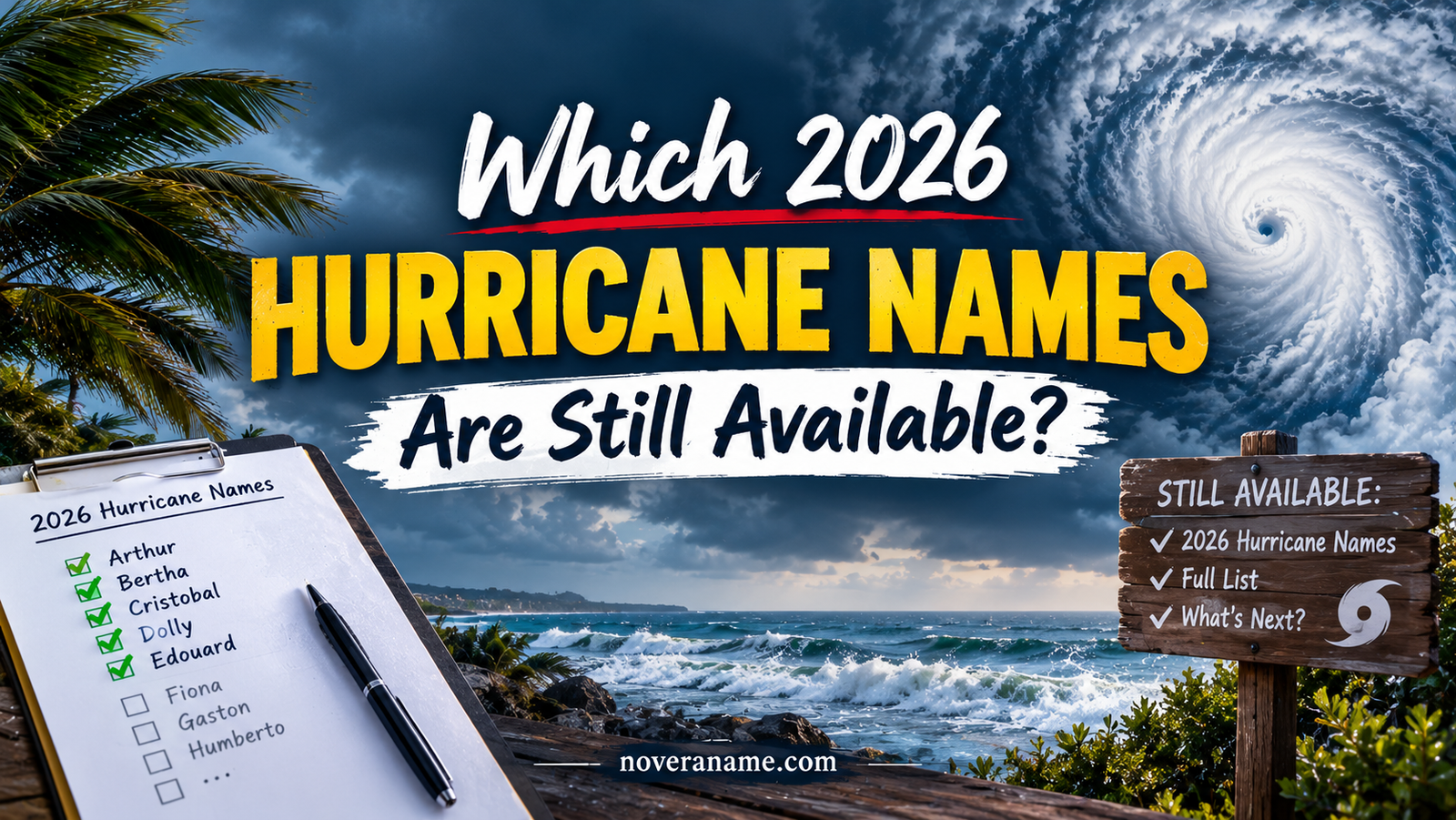
Twelve of the 2026 hurricane names remain: Josephine, Kyle, Leah, Marco, Nana, Omar, Paulette, Rene, Sally, Teddy, Vicky, and Wilfred. Josephine is next in line among the 2026 hurricane names.
The season officially ends on November 30. That leaves roughly six weeks for more of the 2026 hurricane names to be assigned.
NOAA’s updated outlook called for 7 to 13 named storms, with 2 to 6 hurricanes and 0 to 2 major hurricanes. Nine of the 2026 hurricane names have been used, so the season sits within that range.
Late season storms are still possible, especially in the western Caribbean and the Gulf. Warm water there can support development even when El Niño suppresses the main Atlantic region.
How Are Hurricane Names Selected for Each Year?
Hurricane names are not chosen fresh each year. They come from six alternating lists maintained by the World Meteorological Organization. Each list is reused every sixth year.
The 2026 hurricane names come from the list last used in 2020. The 2027 list will be the one last used in 2021, and so on. The National Hurricane Center publishes these lists years in advance, with names posted through 2030.
The 2026 hurricane names mix English, Spanish, and French. That reflects the languages spoken in the regions an Atlantic storm can affect.
Names alternate between male and female. This system began in 1979. Before that, from 1953, storms received only female names.
What Is the Difference Between a Tropical Storm and a Hurricane?
The difference is wind speed. A storm only receives one of the 2026 hurricane names once it reaches tropical storm strength, and it becomes a hurricane only if its winds grow stronger still.
Here are the stages:
- A tropical depression has sustained winds up to 38 mph.
- A tropical storm has sustained winds from 39 to 73 mph.
- A hurricane has sustained winds of 74 mph or higher.
A tropical depression gets a number, not one of the 2026 hurricane names. The name is assigned when winds reach 39 mph.
The distinction matters for forecasting and warnings, but it can mislead people. Tropical storms can cause deadly flooding and storm surge. Arthur and Bertha showed that clearly.
Why Do Hurricanes Have Names?
Names make storms easier to communicate about. The 2026 hurricane names are short and familiar, which is clearer than a latitude and longitude, especially when several storms are active at once.
Before naming began, storms were identified by location or the date they struck. That led to confusion in forecasts, ship reports, and news coverage.
A name also helps the public remember a specific threat. Emergency managers say people respond more reliably to warnings tied to a name they recognize.
Who Decides the 2026 Hurricane Names?
The World Meteorological Organization decides. A regional committee, the Hurricane Committee for the Atlantic region, maintains the lists and votes on changes.
The National Hurricane Center in Miami uses the lists operationally. Forecasters there assign the next of the 2026 hurricane names when a system qualifies.
The public does not vote on the 2026 hurricane names, and individual forecasters do not pick them. The order is set in advance. Only a retirement decision changes a list.
Why Are There 21 Hurricane Names?
Each Atlantic list has 21 names because it skips five letters: Q, U, X, Y, and Z. The alphabet has 26 letters, and removing five leaves 21 slots for the 2026 hurricane names.
The omitted letters have few common names in English, Spanish, and French. A list that included them would require unusual or hard to pronounce choices, which defeats the point of a clear name.
Twenty one is also enough for a normal season. The average year produces about 14 named storms, so most seasons never reach the end of the list of 2026 hurricane names.
Do the 2026 Hurricane Names Repeat?
Yes. The 2026 hurricane names repeat on a six year cycle. They were used in 2020 and will return in 2032.
The only exceptions are retired names, which are replaced with new ones. That is why Leah appears among the 2026 hurricane names in place of Laura.
Can a Hurricane Name Be Retired?

Yes. If a storm is deadly or costly enough that using its name again would seem insensitive, the World Meteorological Organization can retire it. A new name replaces it on that list.
Laura is the clearest recent example for the 2026 hurricane names. It struck Louisiana as a Category 4 hurricane in August 2020, the strongest to hit the state since 1969. The name was retired and Leah took its place.
Retirement decisions are made after the season. Any of the 2026 hurricane names that causes extreme damage could be retired at the committee’s next meeting.
Isaias was forecast to reach the northern Gulf Coast as a hurricane, so its impacts will be reviewed like any other storm’s. Retirement is rare, though, and is reserved for the most severe cases.
What Happens If All 21 Names Are Used?
If all 2026 hurricane names are used, the World Meteorological Organization now turns to a supplemental list. It replaced the old method of using Greek letters, which was dropped after 2020.
The 2020 season used all 21 names and then moved through the Greek alphabet. That created confusion, and the Greek names Eta and Iota were later retired.
The supplemental list begins with Adria, Braylen, Caridad, Deshawn, Emery, Foster, Gemma, Heath, Isla, Jacobus, Kenzie, Lucio, Makayla, Nolan, Orlanda, Pax, Ronin, Sophie, Tobias, Vivian, and Will.
With nine of the 2026 hurricane names used, running out is extremely unlikely this year.
Are All 2026 Hurricane Names Actually Hurricanes?
No. The 2026 hurricane names are simply labels for storms that reach tropical storm strength. Most named storms never become hurricanes, and this year has made that point clearly.
Eight named storms formed before Isaias, and none reached hurricane strength in real time. That is highly unusual.
In an average season, about half of named storms become hurricanes. The long term average is 14 named storms, 7 hurricanes, and 3 major hurricanes.
So when you read the 2026 hurricane names, remember that it is really a list of tropical storm names, some of which may later strengthen.
How Are Hurricanes Categorized?
Hurricanes are rated on the Saffir Simpson Hurricane Wind Scale, which runs from Category 1 to Category 5 based on sustained wind speed:
- Category 1: 74 to 95 mph
- Category 2: 96 to 110 mph
- Category 3: 111 to 129 mph
- Category 4: 130 to 156 mph
- Category 5: 157 mph or higher
Category 3 and above are called major hurricanes. The scale measures wind only. It does not capture storm surge or rainfall, which often cause the most deaths.
Isaias entered the scale as a Category 1 hurricane. Forecasters said it had a chance of reaching Category 2 or higher over very warm Gulf water.
2026 Hurricane Names and Pronunciation
Several of the 2026 hurricane names are easy to mispronounce. Here is a quick pronunciation guide to the 2026 hurricane names:
- Arthur: AR ther
- Bertha: BUR thuh
- Cristobal: kris TOH bul
- Dolly: DAH lee
- Edouard: ed WAR
- Fay: FAY
- Gonzalo: gon ZAH loh
- Hanna: HAN uh
- Isaias: ees ah EE ahs
- Josephine: JOH zeh feen
- Kyle: KYLE
- Leah: LEE uh
- Marco: MAR koh
- Nana: NAH nuh
- Omar: OH mar
- Paulette: paw LET
- Rene: reh NAY
- Sally: SAL ee
- Teddy: TED ee
- Vicky: VIK ee
- Wilfred: WIL fred
Why Are Some Letters Missing From the 2026 Hurricane Names?
The 2026 hurricane names skip Q, U, X, Y, and Z. These letters begin very few names in the three languages used by the lists.
A name has to be short, familiar, and distinct from other names. Finding 21 such names is manageable. Finding 26 would force less recognizable choices.
Do Hurricane Names Tell Us How Strong a Storm Will Be?
No. None of the 2026 hurricane names carries information about intensity, size, or track. A name only marks the order in which storms formed.
A storm named Arthur and a storm named Wilfred follow the same rules. Either could be weak or devastating. The 2026 season shows this: Arthur lasted about a day, while Isaias became the first hurricane.
To judge a storm’s strength, look at its current wind speed and official category. The National Hurricane Center’s advisories list both, along with watches and warnings.
When Does Hurricane Season Begin and End?
The Atlantic hurricane season begins on June 1 and ends on November 30. That window covers the large majority of activity involving the 2026 hurricane names and other Atlantic storms.
The 2026 season began on June 1, and Arthur formed on June 17. As of mid October, about six weeks of official season remain.
When Is the Atlantic Hurricane Season Usually Most Active?
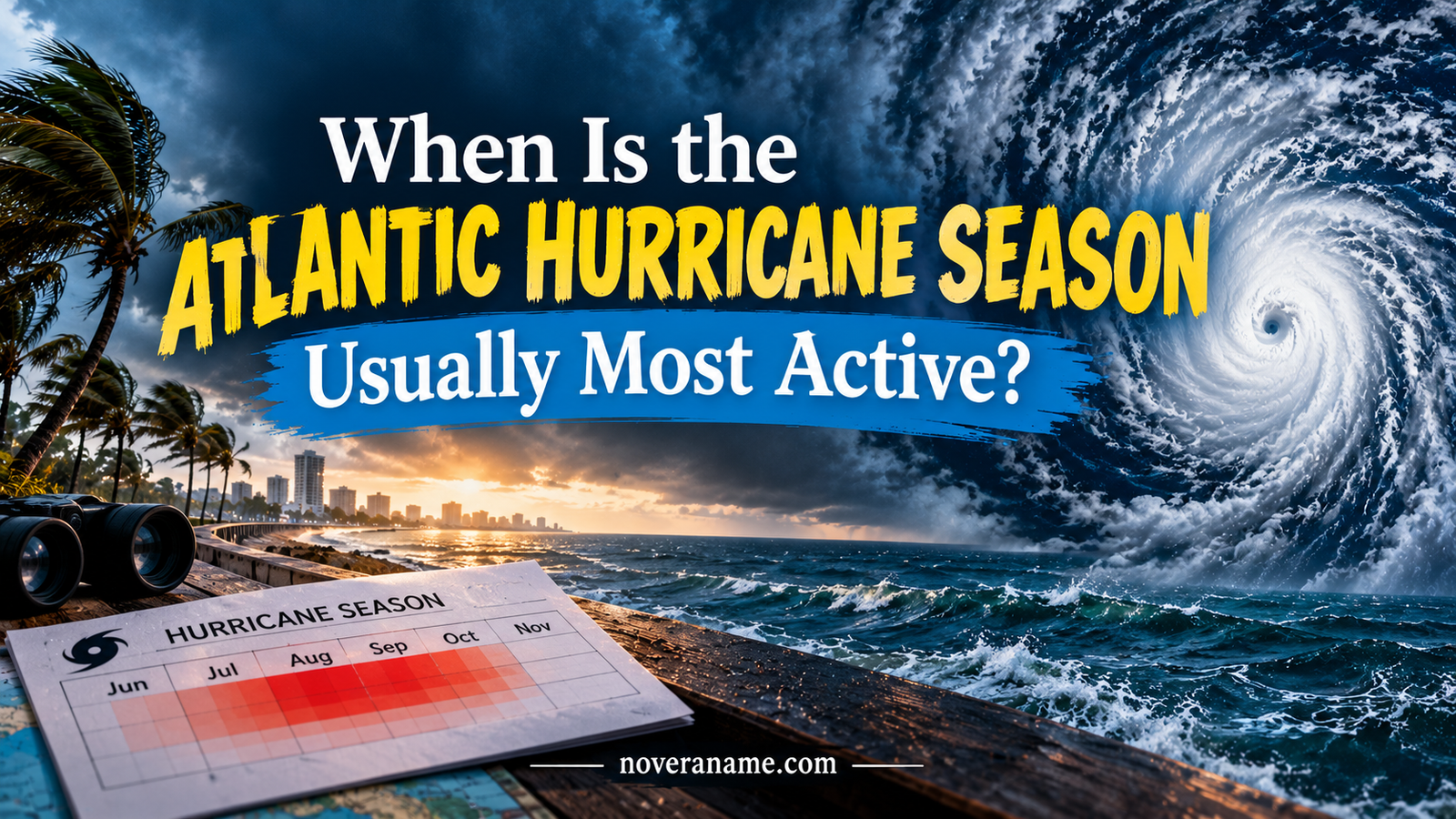
Activity typically peaks around September 10. The busiest stretch runs from mid August through October, when ocean water is warmest and wind shear is usually lower.
An average season sees its first hurricane around August 11. In 2026, that milestone came about two months late.
A strong El Niño explains much of the delay. It increases wind shear over the Atlantic and makes it harder for storms to organize. That pattern limited how many of the 2026 hurricane names became hurricanes.
Even so, late season storms can be intense. Warm Gulf and Caribbean water can support rapid strengthening, as Isaias showed.
Which Areas Are Most Affected by Atlantic Hurricanes?
The Gulf Coast, Florida, and the Carolinas face the highest risk in the United States. Any of the 2026 hurricane names could threaten these areas. The Atlantic seaboard farther north can also be hit, often by weakened storms that still bring heavy rain.
In the Caribbean, islands such as Jamaica, Cuba, and the Bahamas are frequently affected. Mexico’s Yucatan Peninsula and Central America also see regular impacts.
Inland areas are not safe. Heavy rain from a decaying storm can cause flooding hundreds of miles from the coast. That was a clear lesson from Arthur this year.
Anyone living in these regions should know their evacuation zone and flood risk, regardless of how quiet a season looks.
How Can You Track Hurricanes During the 2026 Season?
The National Hurricane Center at hurricanes.gov is the main source for tracking the 2026 hurricane names. It posts advisories, forecast cones, and watches and warnings for every named storm.
Other reliable tools include:
- The National Weather Service forecast office for your area
- NOAA Weather Radio for alerts without internet access
- Local television and radio meteorologists
- Mobile weather apps with official alert feeds
Check updates at least every six hours during an active threat. Advisories are issued on a regular schedule, with intermediate updates when conditions change quickly.
What Should You Include in a Hurricane Preparedness Kit?
Build your kit before one of the 2026 hurricane names threatens your area. Stores empty quickly once a warning is issued. A basic kit should include:
- Water, at least one gallon per person per day for three days
- Nonperishable food for three days
- A flashlight and extra batteries
- A first aid kit and basic medications
- A battery powered or hand crank NOAA weather radio
- Phone chargers and a portable power bank
- Copies of important documents in a waterproof bag
- Cash in small bills
- Hygiene items, and supplies for infants and pets
Also make a household plan. Know your evacuation route, agree on a meeting place, and keep your vehicle fueled. Review the plan at the start of each season, even when forecasts call for fewer storms.
How Are Hurricanes Different From Typhoons and Cyclones?
They are the same type of storm. The name depends on where it forms.
- In the Atlantic and the eastern Pacific, it is called a hurricane.
- In the northwestern Pacific, it is called a typhoon.
- In the Indian Ocean and South Pacific, it is called a tropical cyclone.
Each region has its own naming lists and agencies. The 2026 hurricane names apply only to the Atlantic basin. The eastern Pacific uses a separate list, which is why storms like Hurricane Polo carry different names this year.
2026 Hurricane Names: Quick Reference
Here is a short summary of the 2026 hurricane names and where the season stands:
- Total 2026 hurricane names on the list: 21, from Arthur to Wilfred
- Names used so far: nine, from Arthur through Isaias
- Names remaining: Josephine, Kyle, Leah, Marco, Nana, Omar, Paulette, Rene, Sally, Teddy, Vicky, Wilfred
- New name this year: Leah, replacing the retired Laura
- Season dates: June 1 to November 30
- First hurricane: Isaias, on October 8, the latest on record in the satellite era
- Skipped letters: Q, U, X, Y, Z
- Backup list: the WMO supplemental list, beginning with Adria
Bookmark this section for quick checks on the 2026 hurricane names as new storms form.
Frequently Asked Questions
What are the 2026 hurricane names?
The 2026 hurricane names are Arthur, Bertha, Cristobal, Dolly, Edouard, Fay, Gonzalo, Hanna, Isaias, Josephine, Kyle, Leah, Marco, Nana, Omar, Paulette, Rene, Sally, Teddy, Vicky, and Wilfred.
What is the first name on the 2026 hurricane list?
Arthur is the first of the 2026 hurricane names. It was assigned to the first named storm of the season, which formed on June 17.
What is the last name on the 2026 hurricane list?
Wilfred is the last of the 2026 hurricane names. A storm only receives it if 20 other named storms form first.
Are all 2026 hurricane names guaranteed to be used?
No. Most seasons do not use the full list, and the 2026 hurricane names are no exception. The average year has about 14 named storms, and this season has produced only nine so far.
Are hurricane names reused?
Yes. Each list repeats every six years. The 2026 hurricane names were last used in 2020. Retired names are replaced with new ones, such as Leah replacing Laura.
What happens when the hurricane names run out?
If the 2026 hurricane names run out, the World Meteorological Organization’s supplemental list takes over, starting with Adria. The old practice of using Greek letters was discontinued after 2020.
Does a hurricane’s name indicate its category?
No. None of the 2026 hurricane names reflects strength. A name only shows the order of formation. A storm’s strength is shown by its wind speed and category on the Saffir Simpson scale.
Why are Q, U, X, Y, and Z missing?
Few names in English, Spanish, and French begin with those letters. Skipping them leaves 21 clear, familiar 2026 hurricane names.
Conclusion
The 2026 hurricane names follow a long established system built for clarity. Twenty one names, rotating lists, and a retirement process keep storm communication simple and consistent.
This season has been unusual. Nine of the 2026 hurricane names have been used, and the first hurricane did not arrive until October, a record for the satellite era. Twelve names remain, from Josephine to Wilfred, and the season runs through November 30.
Quiet stretches should not lull anyone into complacency. A single storm can cause major damage in any season. Know the 2026 hurricane names, follow official forecasts, and keep your preparedness kit ready.

I’m Andy Borowitz, an American writer, comedian, and satirist known for political humor and sharp social commentary. I helped create The Fresh Prince of Bel Air and founded The Borowitz Report, a popular satirical news column. My work has also appeared in The New Yorker, earning recognition for its witty take on politics and current events.










1 thought on “Shocking 2026 Hurricane Names Guide: Full List & Status”